Understanding the Concept of Species Packing: Insights from Dr. Robert MacArthur's Research Fundamentals Explained


Checking out Dr. Robert MacArthur's Effect on Modern Conservation Biology
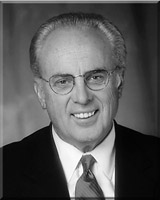
Dr. Robert MacArthur was a well-known American environmentalist whose important work in the area of conservation the field of biology has left a long-term effect on the medical community. His introducing study and groundbreaking concepts have shaped our understanding of biodiversity, species interactions, and ecological community characteristics. This article checks out Dr. MacArthur's additions to contemporary conservation the field of biology and the relevance of his work.
Read This of Dr. MacArthur's very most noteworthy payments is his development of the concept of isle biogeography, which he co-authored with Edward O. Wilson in 1967. The concept changed our understanding of how species are distributed on islands and has since been applied to numerous ragged habitations worldwide.
The concept of island biogeography advises that the variety of species current on an island is identified by a equilibrium between immigration and termination fees. Bigger islands closer to mainland resources possess greater migration rates, enabling for more unique areas to establish and continue to persist over time. Conversely, much smaller islands even farther away from mainland locations experience reduced migration fees and are more susceptible to terminations.
This concept offered a platform for understanding how human tasks such as habitation fragmentation can easily affect biodiversity reduction in environments worldwide. It highlighted the usefulness of keeping big adjoining habitats to sustain sensible populaces and prevent termination celebrations.
One more notable contribution through Dr. MacArthur is his job on particular niche difference and resource dividing among contending species. He explored how similar species exist side-by-side within communities by using different resources or inhabiting different ecological particular niches.
With mindful observation and evaluation, Dr. MacArthur discovered that very closely related species usually tend to inhabit specific niches within their shared environment, decreasing competitors for minimal resources such as meals or nesting websites.
This concept has actually great ramifications for conservation biology as it underscores the importance of preserving environmental variety within environments to make certain the survival of several species along with specialized adaptations.
Additionally, Dr. MacArthur's investigation dropped light on predator-prey interactions and their effect on neighborhood dynamics. He examined how predator populations manage target populations and vice versa, and the responses loopholes that create within communities.
His studies demonstrated that predation can easily possess a stabilizing result on ecosystems, preventing any one species coming from coming to be leading and sustaining a balance between killer and target populaces. This understanding of trophic communications has actually notable implications for conservation attempts striven at restoring or saving natural meals internet.
Dr. MacArthur's impact extended beyond his specific research study payments. He mentored various pupils who went on to ended up being important ecologists themselves, even further spreading his concepts and methodologies.
His importance on area reviews, speculative style, and measurable review has shaped the technique modern ecologists come close to their research. His dedication to pragmatic scientific research carries on to inspire new creations of experts to explore the organic world in hunt of responses to pressing eco-friendly concerns.
In conclusion, Dr. Robert MacArthur's influence on contemporary preservation biology is indisputable. His theory of island biogeography given a visionary framework for understanding biodiversity designs in ragged habitations, while his work on niche market differentiation shed light on the synchronicity of identical species within ecological communities.
In addition, his study on predator-prey interactions highlighted the significance of trophic partnerships for community stability. Through his mentoring and teaching, Dr. MacArthur instilled a sense of extensive medical questions in future generations of environmentalists.
The heritage of Dr. Robert MacArthur lives on with his tips and the influence they proceed to possess in helping preservation attempts worldwide. His job offers as a pointer of the relevance of environmental understanding in making certain the preservation and lasting monitoring of Earth's valuable biodiversity.